Key contributions from civil society at the GFMD Summit ensured thematic Roundtable discussions focused on strong and inclusive global partnerships for rights-based and sustainable policy solutions
By Rachel Westerby
To read this article in English or any other language, please select your preference from the bottom left corner of the website.
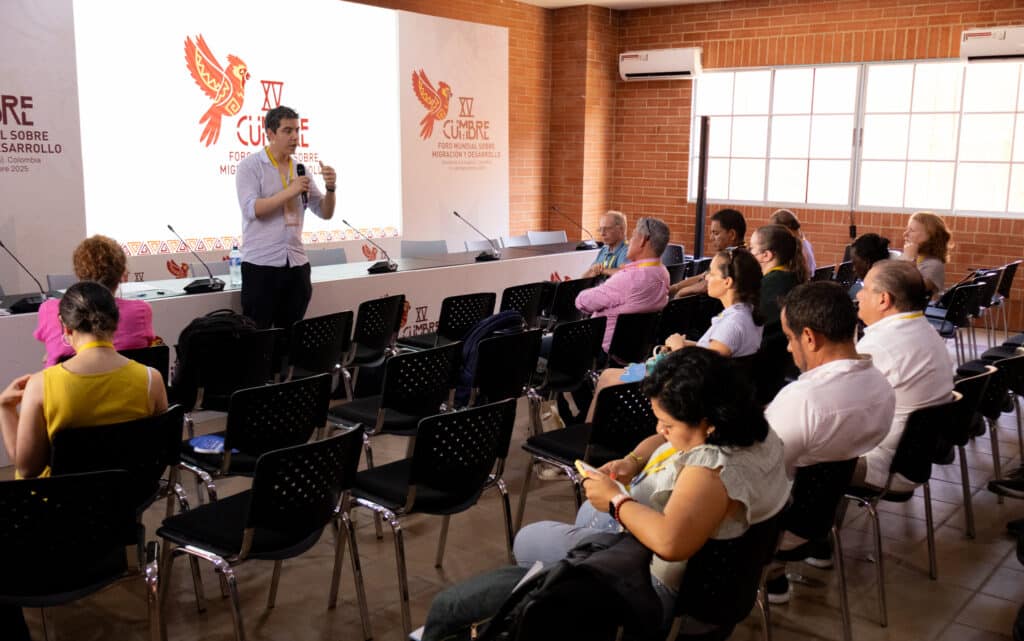
At the 15th Summit of the Global Forum on Migration and Development (GFMD) process, which took place under the Colombian Chairship, in Riohacha on 2-4 September 2025, the presence of civil society again proved crucial to the culminating discussions of the thematic GFMD Roundtable consultations.
Roundtables (RTs) are key GFMD processes for consultative and collaborative work on the thematic priorities selected under each chairship, undertaken during the preparation for each Summit. The RT process engages the GFMD Civil Society, Business and Mayors Mechanisms, the Migration Youth and Children Platform (MYCP), international organisations, academics, development partners, and other stakeholders.
The GFMD Roundtable process in 2024-25
For the 2024-25 GFMD process, the Colombia Chairship introduced new dialogue modalities for the Roundtable process.
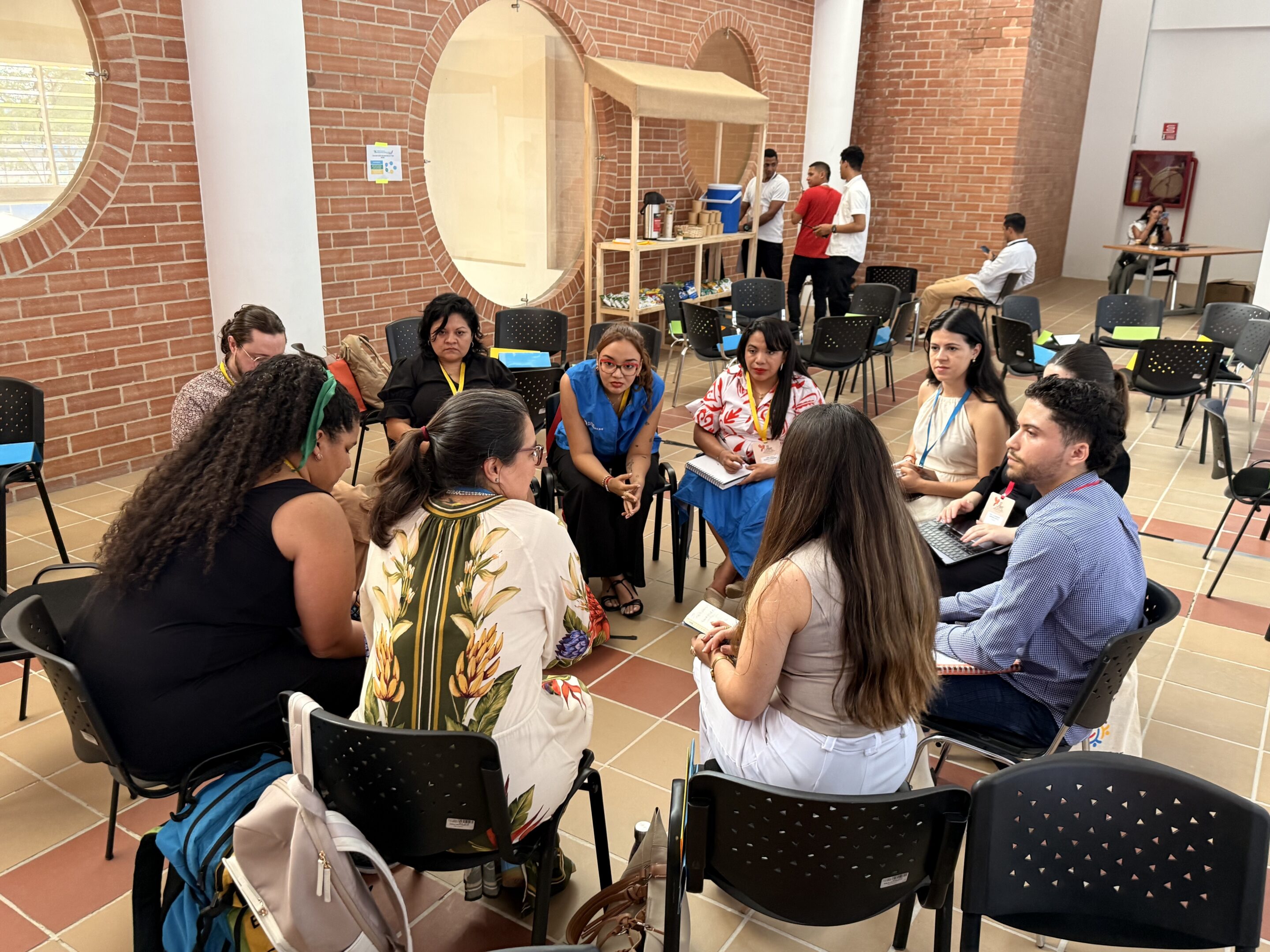
Designed to boost inclusivity and enable more solution-oriented discussions, the amended approach focused on the exchange of perspectives in small groups, with reports to plenary on key insights presented by group rapporteurs. Holding discussions under Chatham House rules additionally aimed to ensure a more open, honest and informal exchange.
A three-stage process saw a first consultation on challenges and opportunities (6-7 November 2024), and a second on promising practices and conditions for replicability (19-20 February 2025), both held in Geneva. The third and final Roundtable consultations took place at the 15th GFMD Summit in Riohacha, during 2-4 September 2025, and focused on identifying solutions and exploring their implementation.
To enable continuity across the RT consultation process, outcomes of the first two consultations were published in written and video formats* and presented at the outset of each subsequent consultation.
‘Where we’d have the most impact’: Civil Society Mechanism Co-Chairs RT 5
Civil society had a formal role in the GFMD Roundtable process, via the Civil Society Mechanism’s co-chairing of Roundtable 5 (Regional Cooperation and Integration to Promote Safe and Regular Migration for Development), alongside the governments of Egypt and the United Arab Emirates.
“Beginning with the French Chairship of the 14th GFMD, each Mechanism has been given the opportunity to co-chair one of the thematic Roundtables,” explains Elana Wong of the Civil Society Mechanism. “We decided based on where we’d have the most impact, and nominated ourselves to co-chair RT5.”
The first RT5 consultation clearly identified how policy fragmentation and misaligned systems prevent effective regional cooperation on migration, and how the impact of political instability further complicates efforts for policy and systems integration.
“At the Summit, we ensured that the discussion on harmonizing policies included how the capacity of regional and cross-border civil society stakeholder networks can be leveraged in support of regional cooperation, beyond that solely taking place at national government level,” says Elana Wong. “Our networks are already in place, are built on strong relationships of trust, and are effective.”
The decision to co-chair RT5 was also motivated by the crucial role of civil society and its networks in providing comparative perspectives for governments, in particular by promoting the stronger focus on migrant rights and protection within regional cooperation frameworks identified as a key challenge in earlier RT5 consultations.
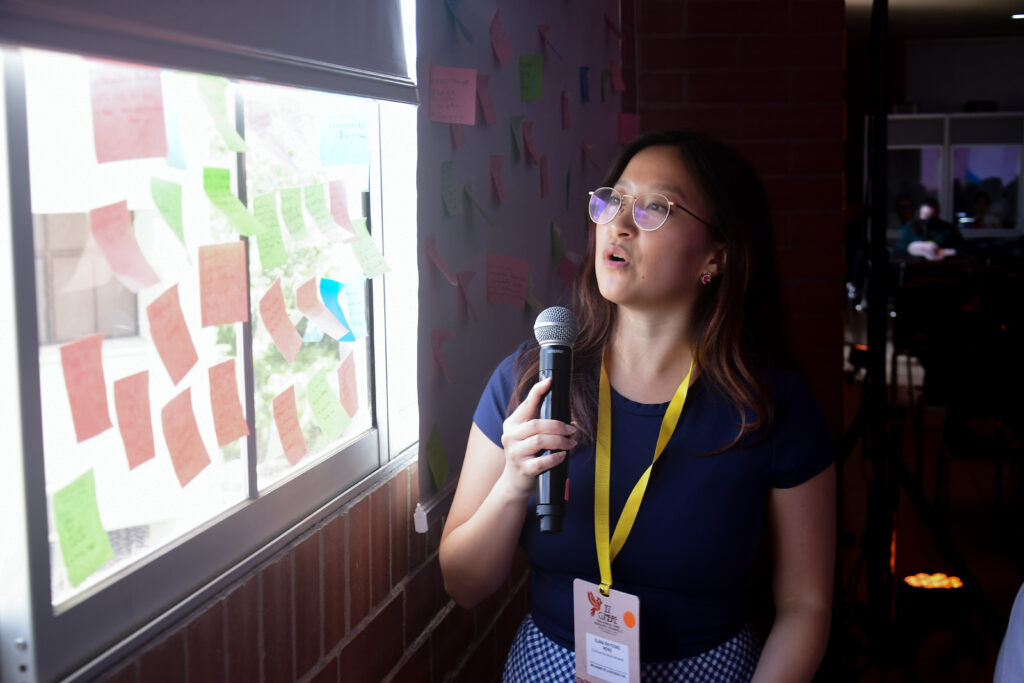
“We wanted to highlight the important feedback and learning that our networks can bring, via the inputs of their members who have direct experience of the implementation and impact of regional cooperation and integration efforts,” explains Elana Wong. “We provided crucial comparative views that governments would otherwise have to spend significant resources gathering.”
Civil society RT5 inputs and the CSM’s co-chair role put civil society at the heart of GFMD discussions concerning what can be perceived as a purely governmental policy area. “Our chairing of RT5 aimed to illustrate why civil society should be included in the discussion, when these agreements are between governments,” Elana explains. “We were able to highlight the pattern of success seen in regional cooperation efforts with robust multistakeholder involvement, at inception and throughout implementation and monitoring. More broadly, in the current global move away from multilateralism, we wanted to throw our support behind the principles of cooperation and integration across borders and migration routes, that centres multistakeholder participation at all levels.”
Ensuring Rights-Based Solutions: Civil Society Key Contributions at the Roundtables
The participation of civil society throughout the RT process was crucial to ensuring an ongoing focus on the lived experiences and situations of migrant and refugees, and the development of rights-based, sustainable policy solutions.
“For me, one of the most important of the solutions we identified was ensuring information firewalls to protect migrant women seeking assistance from mainstream services,” says Paola Cyment of the Women In Migration Network (WIMN), reflecting on RT1 (Strength in Movement: The Impact of Women on Global Migration and Development). “We know from our work that if women in irregular situations fear deportation as a result of their contact with health services, for example, they will not seek the healthcare they need. This is of course very dangerous, for their health and that of their children. So it would greatly advance the human rights of migrant women to ensure that firewalls are in place, and this was an important point in our discussion.”
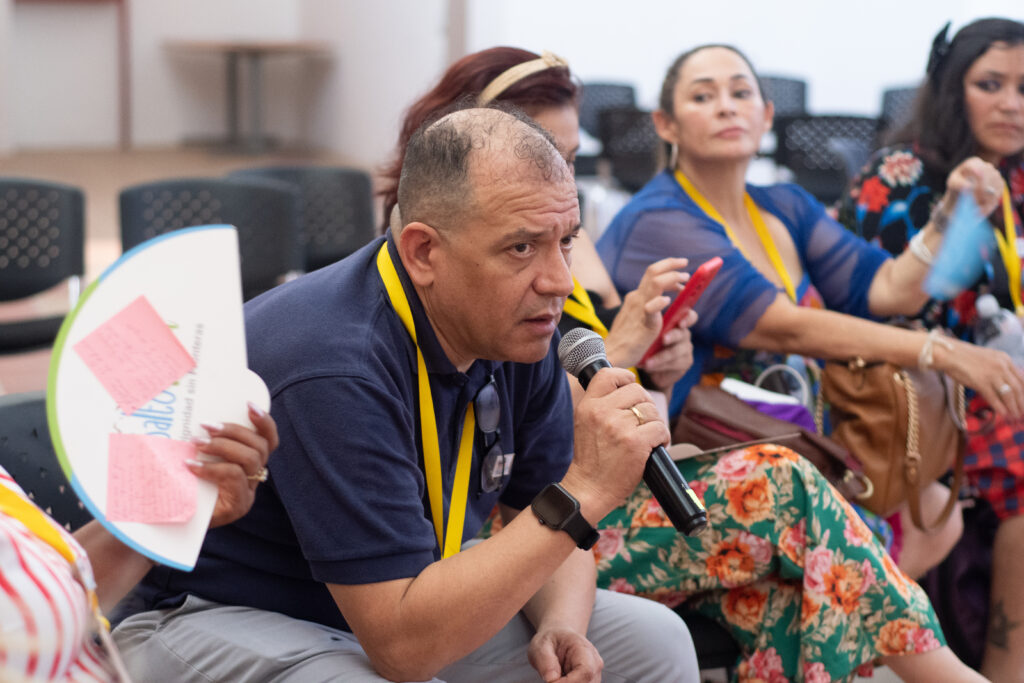
For Ema Vueti of Pacific Migration Partners, civil society participation at RT4 (Climate Change: Safe Labour Routes as a Bridge to Prosperity) was crucial to ensuring both a proper assessment of existing policy, and the centring of a rights-based approach.
“I presented a couple of new visa categories in Australia, which are being presented as mainstream visa schemes for Pacific Islanders, but are in fact climate relocation measures,” she explains. “There’s a danger that countries outside of the region might look at these schemes as promising practices and try to replicate them, and that they will also be presented as visa schemes, absent any consideration of the climate context or human rights objectives and safeguards. That’s why it’s so important for civil society to be there in the conversation, because we point out the gaps and the human rights issues.”
In RT6 (New Technologies and Digitalization: Improving Migration Management and Regular Migration Pathways), civil society contributions supported a shift in focus away from recent technological tools and developments, and toward the impact of technology on migrants and migration governance.
“We focused on the social implications of technology, for migrants in the migration process. Here we see that new technologies to access and manage migration processes are inaccessible to people who are illiterate or without the relevant skills, who have to seek help from intermediaries or “middle men’”, explains Professor Binod Khadria, of the Global Research Forum on Diaspora and Transnationalism (GRFDT).
“These middle men, who are often working with consulates and embassies, charge them ridiculously high fees, and over time access to migration processes becomes an expensive, elitist activity. So we focused on the impact of middle men malpractice, and the need for this area to be regulated and governed. Our key message was that migration management should be preceded by migration governance, and currently migration governance has very many questions to answer.”
Reflecting on RT3 (The Interplay of Media and Culture to Construct and Deconstruct the Reality of Migration), Stella Opoku-Owusu of the African Foundation for Development (AFFORD) highlighted her key takeaways from the discussion on tackling dis/misinformation on migrants and migration.
“We discussed a campaign, and talked about a much broader collaboration with the creative industries, as a way of better reaching the general public, and we were further able to highlight how civil society can act as an expert partner and resource in a new type of relationship with mainstream media,” she recalls. “Overall, my key takeaway was that it’s not for one sector or another to do it, but rather for all to come together.”
The GFMD Roundtable Process: Civil society perspectives
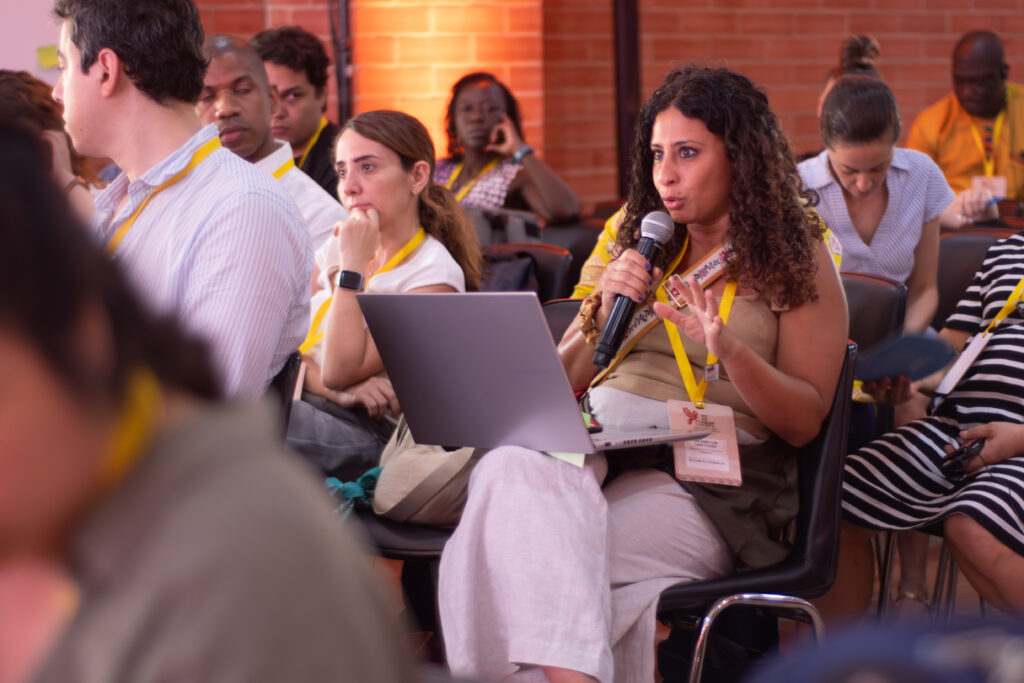
The new dialogue modalities for RT discussions introduced by the Colombia Chairship were broadly welcomed by participating civil society representatives.
“The final RT1 discussion at the Summit brought together civil society, the private sector, international organisations, the International Labour Organization (ILO), and governments,” reflected Paola Cyment. “My key takeaway was that the format enabled a very rich exchange in terms of good practices, and meant that we could define very concrete solutions.”
For Franchesca Regala, Global Focal Point and GFMD Lead for the Migration Youth and Children Platform (MYCP) RT discussions at the Summit emphasized the uniqueness of the GFMD as a multi-stakeholder space.
“I thought the Chatham House rules enabled more open dialogue between stakeholders during the preparatory meetings, and also at the Summit,” she reflects. “That said, much of what was said in the RT2 discussions at the Summit reiterated those from the earlier preparatory meetings. This maybe points to a need for further development of RT approaches at the Summit, so as to remain inclusive, but also better ensure continuity of the discussions throughout the whole process.”
Professor Binod Khadria agrees that the new modalities, while positive, could be further improved. “The discussion in our small group was extremely diverse and wide-ranging thanks to this new format, but in the end our feedback to plenary was limited to just a few minutes,” he says. “Although I very much appreciated the discussion, it was quite difficult to convey to others the full depth of what we’d talked about.”
These new modalities, which offer an informality that is highly valued by governments but also risk diluting discussions or keeping them at surface level, the Civil Society Mechanism produced advocacy papers for the first two Roundtable consultations. The Advocacy Papers distil key messages for the GFMD community, and offer concrete recommendations on the challenges and opportunities related to the six thematic priorities, and the elements that contribute to successful policies and practices.
Overall, Roundtable discussions demonstrated that the GFMD is a dynamic process, able to adapt its format to enable more nuanced and open debate. However, dialogue is only the first step; turning civil society’s rights-based approaches into reality for all migrants requires multistakeholder partnerships implementing practical solutions on the ground.