At the 15th GFMD Summit in Riohacha, Colombia, civil society raised its voice at the Summit plenary, through campaign actions, and in dialogue with governments
By Rachel Westerby
To read this article in English or any other language, please select your preference from the bottom left corner of the website.
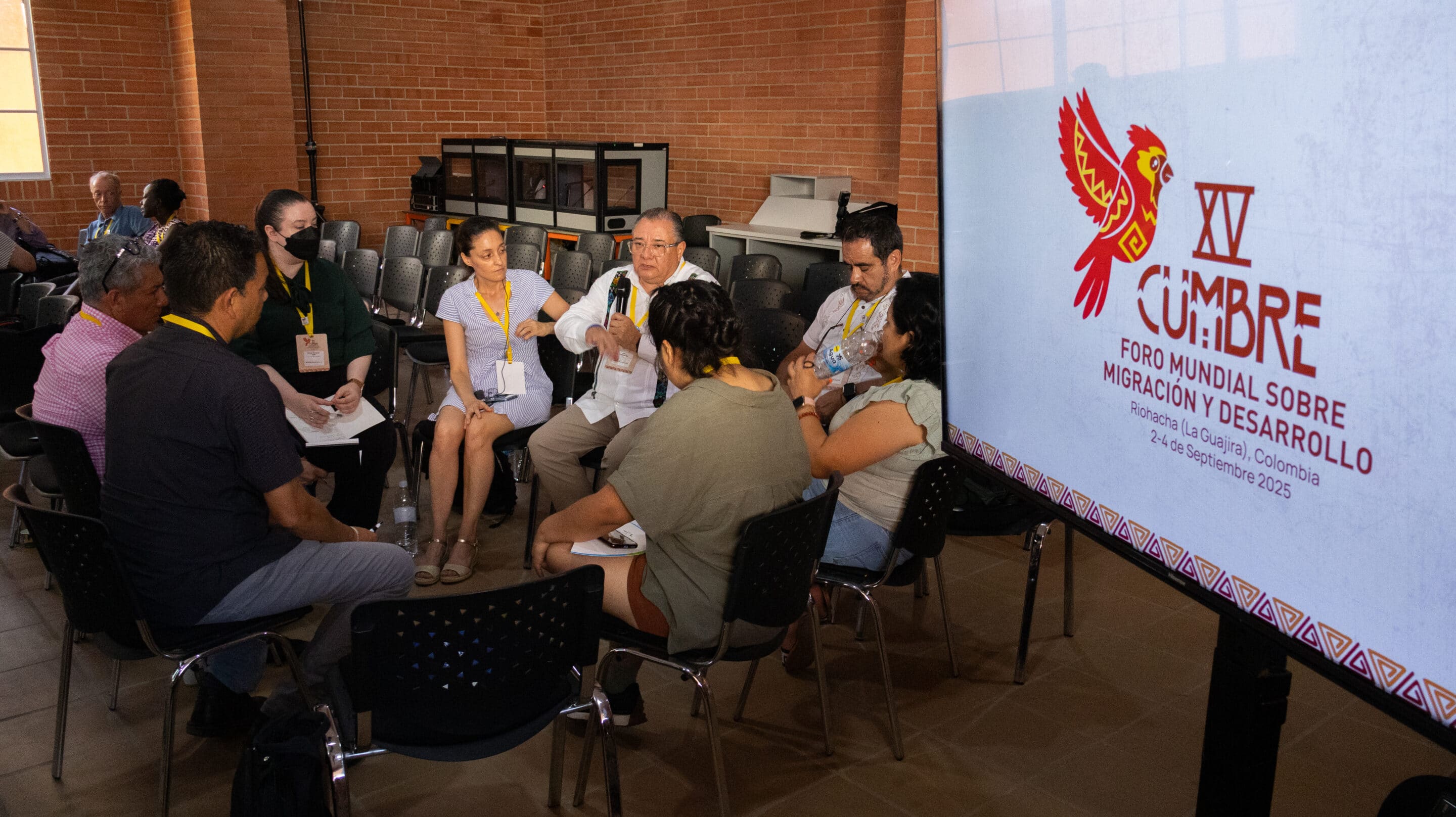
A delegation of 74 civil society representatives participated in the 15th Summit of the Global Forum on Migration and Development (GFMD) process, under the Colombian Chairship, which took place in Riohacha on 2-4 September 2025.
The presence of civil society at the GFMD Summit marked the culmination of the 2024-2025 civil society GFMD preparatory process, known as ‘Sociedad Civil en Rumbo a Colombia’ (Civil Society on the Road to Colombia).
Throughout the discussions and exchanges facilitated during the Summit, the civil society delegation took forward the priorities and concerns articulated during this process. Their participation took place alongside the unprecedented launch at the Summit of the global civil society campaign Resist, Reclaim, Realise: Migrant Rights are Human Rights.
Civil Society at the GFMD Summit Plenary
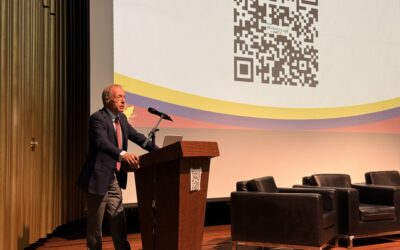
With limited possibilities for civil society representatives to directly attend the Summit’s opening plenary, responsibility for representing the “enormous diversity of needs, priorities and truly desperate situations” faced by the civil society fell to Nidia Tarazona, of the General Confederation of Labor in Colombia (Confederación General del Trabajo). Her address was drafted as a collaborative effort with delegation leaders representing global civil society, following the fourth Civil Society Preparatory Meeting (CSPM4) held the day before the Summit.
Opening her intervention with a powerful rendition of the ‘Resist, Reclaim, Realise’ civil society campaign slogan, Tarazona detailed the alarming extent of the criminalisation of migration, exclusion of migrants, and violations of international law ongoing around the world. “We need to resist these narratives and policies of terror, cruelty and dehumanisation of people on the move: migration is not a crime, and human mobility is a right,” she stated. “We therefore make a firm and urgent call for the humanisation of migration, for the recognition of the right to migrate and also the right not to migrate, in conditions of safety, freedom, dignity and well-being.”
Tarazona focused in particular on the erosion of the international human rights framework, decrying the “forced separation of parents and children, the deportation of people during their naturalisation ceremonies, and the genocide in Gaza with no response from the international community.” She further urged governments to harmonise national legislation with fundamental rights, and ensure migrants enjoy access to the full range of rights and protection to which they are entitled.
Tarazona also highlighted the critical issue of the involvement of migrants and their civil society representatives in international spaces and dialogues on migration and development. “We remind the Forum that you cannot talk about migrants without them,” she said. “Governments have other spaces and intergovernmental dialogues, but this is the only space for dialogue on migration and development that is truly led by Member States, with the participation of stakeholders. Therefore, all sessions of the Forum must be held with sufficient representation of migrants and those who represent them.”
Concluding her plenary remarks with a call to work toward a better future, Tarazona urged all present to be courageous. “What is happening to migrants and their families, and the rollback of human rights around the world, cannot be normalised,” she stated. “We must resist these violations of international obligations. We must reclaim what we have lost. We must recognise that the rights of migrants are human rights, and that human rights are non-negotiable.”
Sounding the Alarm: Civil Society Campaign Actions at the 2025 GFMD Summit
The global civil society campaign Resist, Reclaim, Realise: Migrant Rights are Human Rights, was at the centre of all civil society interventions, and also actions, at the 15th GFMD Summit. The campaign, launched the day before the Summit during the fourth Civil Society Preparatory Day (CSPM4), aims to harness the collective power of global civil society to meet the urgency and challenge of the current moment with respect to migrant and human rights.
“We must use our numbers, our solidarity, and our resolve to ensure that this Forum is not just another performance of polite dialogue, but a turning point,” urged Kati Garrison of the NGO Committee on Migration at the CSPM4. “It must be the launchpad of a campaign that reclaims moral leadership and insists that migrant rights are non-negotiable human rights.”
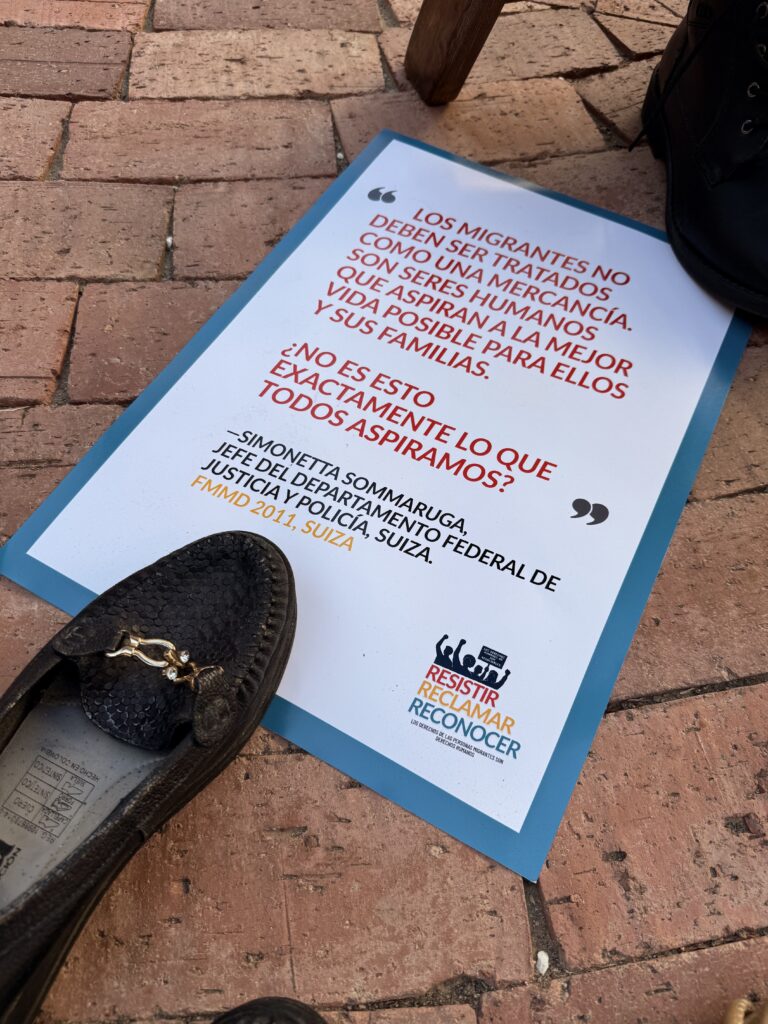
To ensure the campaign’s visibility across the Summit’s agenda, civil society collectively implemented three key campaign actions:
- Posters displaying positive statements on migration made by states and international actors at prior GFMDs, to serve as a reminder of past commitments, yet to be realised.
- A reminder of all those left behind: a symbolic commemorative space was set up at the centre of the library courtyard (see image on the left) with chairs put in a circle, bandanas with the colours of the campaign, and numerous shoes donated by local civil society to symbolise people on the move left outside of decision-making spaces, and communities left behind. Posters from migrant rights and justice campaigns by various delegation members, as well as past quotes and commitments from the GFMD community, were also displayed.
“The Summit actions aimed to highlight unfulfilled commitments, and to contrast the current climate of hostility and xenophobic rhetoric with how migration was talked about in the past,” explained Hazel Contreras of Alianza Americas, a campaign contact point for the Americas regions. “The reminder actions were about strongly and visibly sounding the alarm, to remind everyone that what we were discussing at the Summit is happening out there in the world, and that the situation is urgent.”
“Together we will find solutions”: Government-Civil Society Chat Circles at the GFMD Summit
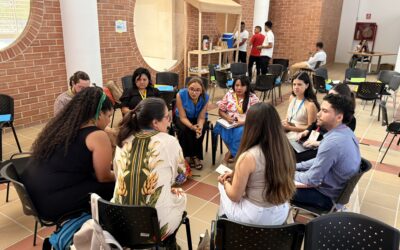
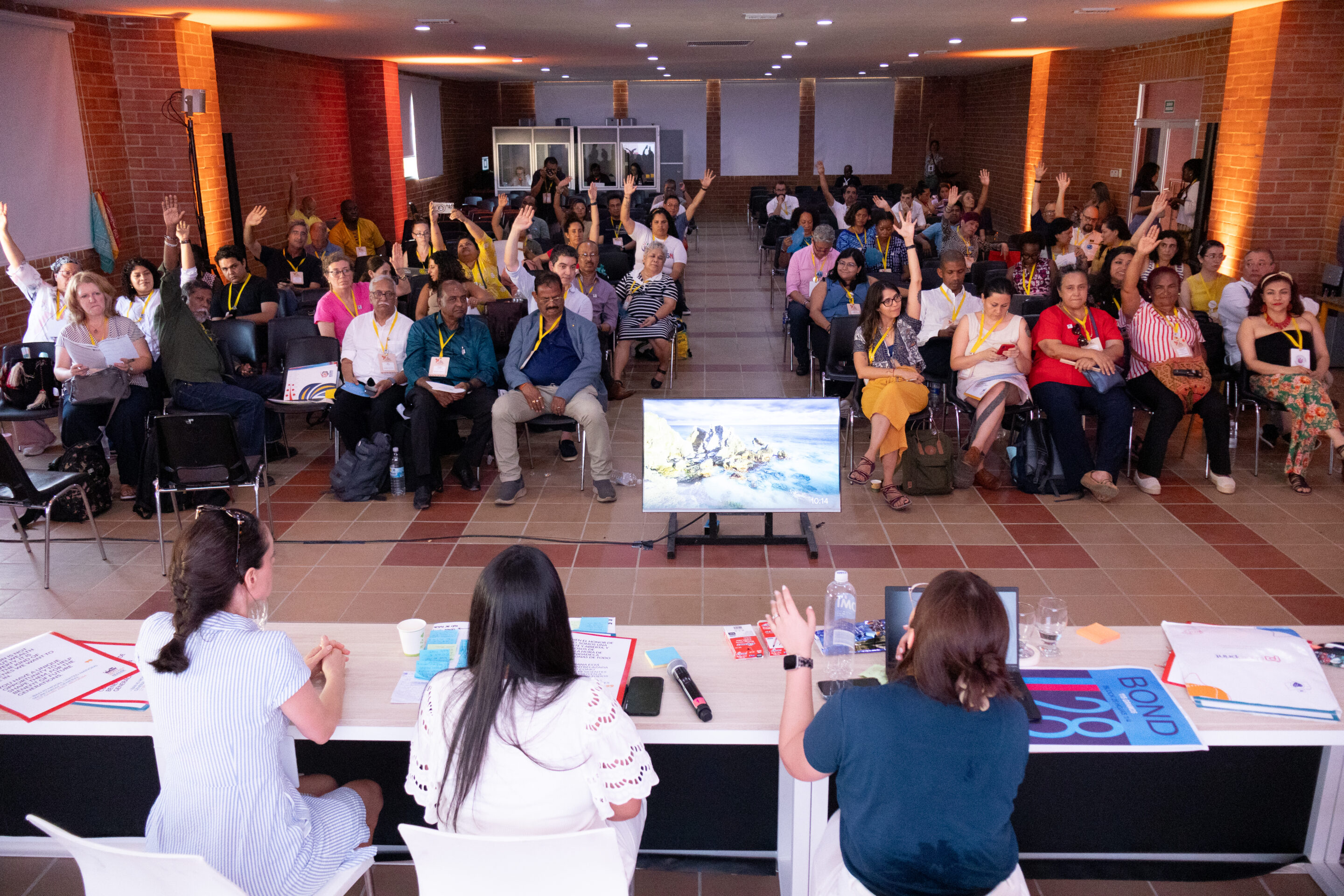
On 3 September, the second day of the Summit, civil society and government representatives gathered together for the GFMD Government-Civil Society Chat Circles.
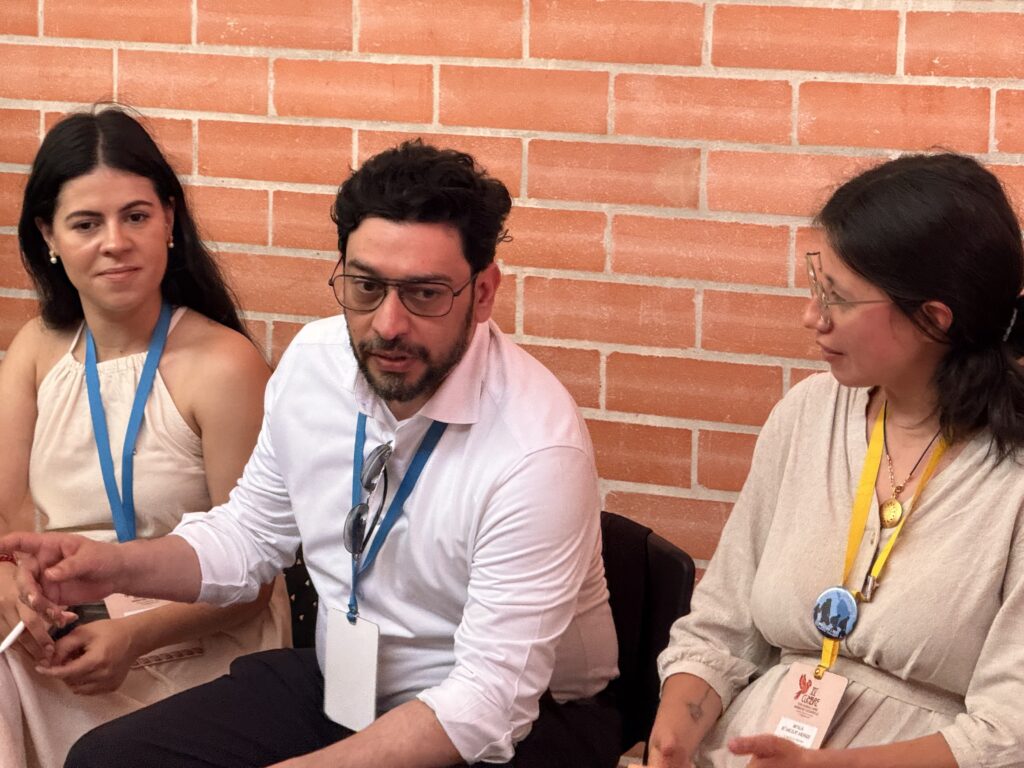
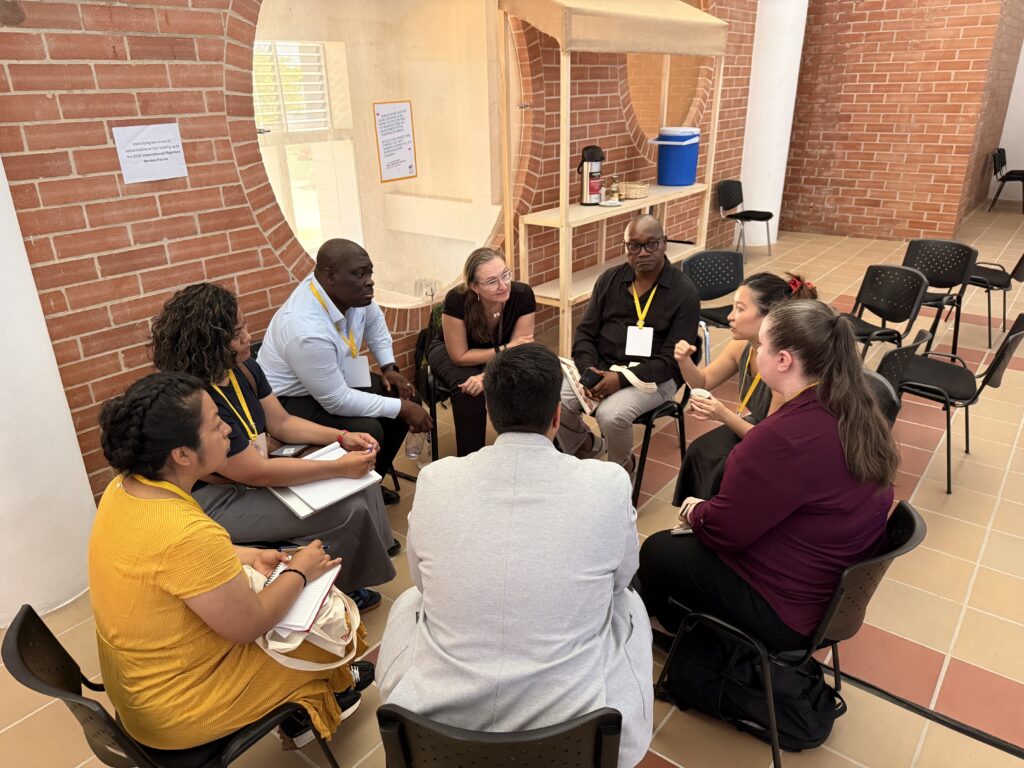
Coordinated by the Civil Society Mechanism, these informal exchanges between governments and civil society are a longstanding flagship event for civil society, offering an informal space for dialogue and genuine exchange on migration issues beyond solely the Chair’s thematic priorities. The main objective of the Chat Circles is to foster an open and honest dialogue on the ongoing challenges faced by migrants, community organisers, and governments in promoting a rights-based migration agenda, at the grassroots, local, national, and international levels.
Discussions revolved around the following topics:
- Addressing and finding complementarities to mitigate the impact of global financial cuts for migration governance.
- Building political support for the development and implementation of regularisation and residence permit schemes.
- Exchanging on mechanisms to strengthen partnerships between grassroots civil society and national governments to enhance human rights protection at the ground level.
- Identifying key areas of collaborative action leading up to the 2026 International Migration Review Forum
Three individual Chat Circle groups focused on government-civil society cooperation mechanisms, and the current situation for global humanitarian and development funding.
“I was in the group discussing the funding situation, particularly the reductions in U.S. funding, and it was very interesting for me to see that civil society was not expecting solutions solely from governments,” said a French government representative. “Instead, they were also being critical of themselves and the way they operate, and in the end we saw that we are all facing the same challenges as institutions: we duplicate activities, we sometimes only have one source of funding, we do not diversify. Together, I think we can arrive at better solutions.”
A Bangladeshi government representative charted the specific impacts of funding cuts for Bangladesh, and echoed the French representative’s belief in the possibility of collaboration to find solutions.
“One immediate impact for Bangladesh is that we were receiving funding from other countries to meet the humanitarian needs of the 1.3 million Rohingya refugees from Myanmar that we are currently hosting. So this money was being used to feed people, and it’s going to be very difficult for Bangladesh to meet that cost going into the future,” they said. “Together we talked about some very practical solutions, including alternative sources of funding, and fighting corruption. It showed that if we work smarter and more collaboratively, we can find solutions.”
Reflecting on the discussion on cooperation mechanisms, a representative of the government of Honduras welcomed the opportunity to engage in direct dialogue with civil society. “I think we both sets of actors have legitimate questions to ask of the other, and we also struggle with the same issues, in areas such as being a legitimate voice for the people we claim to represent,” he said. “It’s a matter of good governance to include the views of other people, and I think there are a lot of lessons to be drawn from local government approaches to engaging civil society that we can replicate at the international level, as we have done here.”
Government Chat Circle participants agreed that deeper and more structured dialogue is crucial to addressing the changed landscape for humanitarian work and migrant rights, now and into the future.
“The discussion today was very precious, because it gives us as governments an opportunity to understand more about challenges around the world, including for those organisations overseas with whom we might work in partnership,” said the French representative “I feel guardedly optimistic, because I can see that collectively we will be able to adapt. It’s an optimism that I know will be tested in a much more difficult context in the future. But that’s why we must maintain spaces for dialogue at all levels, including the GFMD, going forward.”