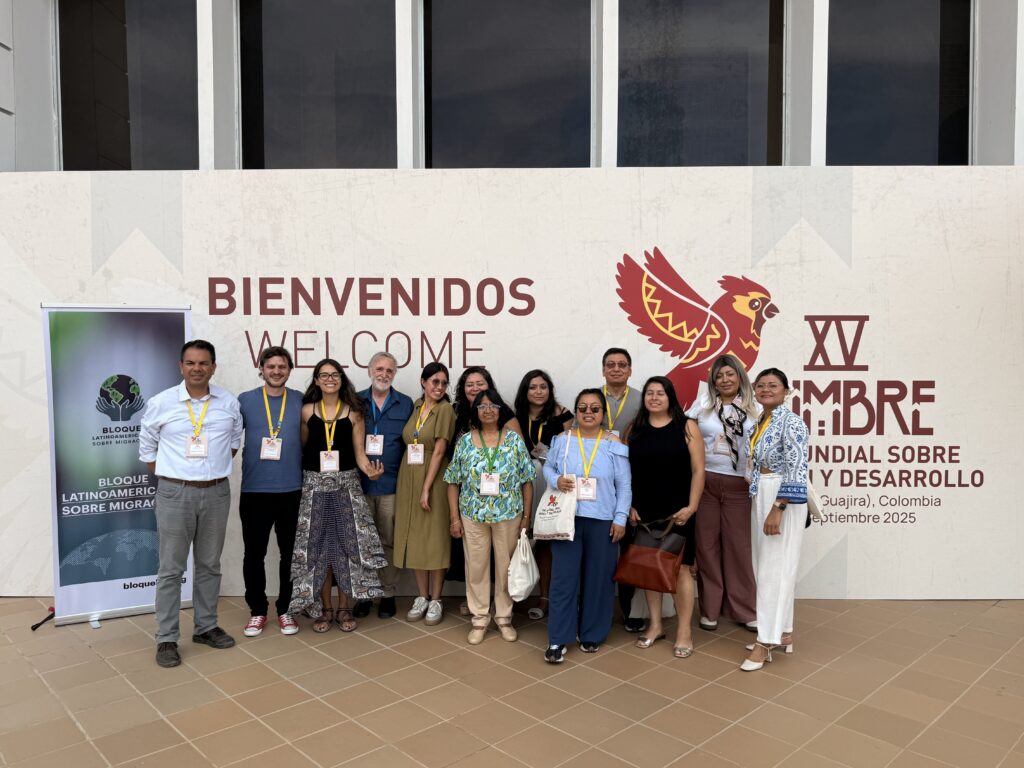
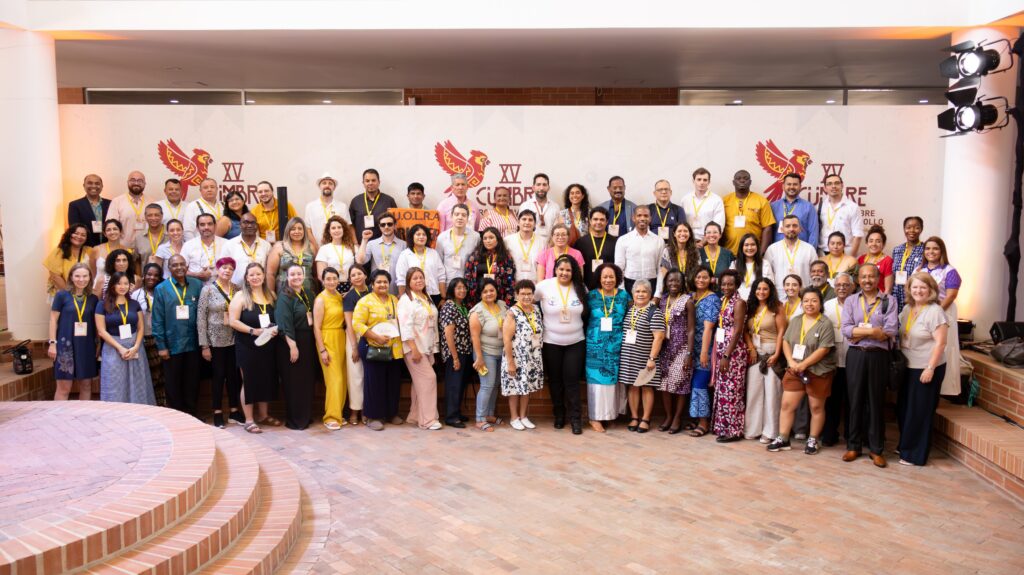
The day before the 15th GFMD Summit in Riohacha, Colombia, civil society came together to address the criminalization of migration and solidarity around the world
By Rachel Westerby
The 15th Summit of the Global Forum on Migration and Development (GFMD) process, under the Colombian Chairship, took place in Riohacha from 2 to 4 September 2025.
The day before the Summit, civil society came together for the fourth and final Civil Society Preparatory Meeting (CSPM4), marking the culmination of the 2024-2025 civil society GFMD preparatory process known as ‘Sociedad Civil en Rumbo a Colombia’ (Civil Society on the Road to Colombia).
In an unprecedented initiative for civil society at the GFMD, CSPM4 served as the platform to launch the global civil society campaign ‘Resist, Reclaim, Realise: Migrant Rights are Human Rights’. The campaign aims to take control of the migrant and human rights agenda, set the tone for civil society engagement in international governance and migration discourse, and build collective solidarity with wider social and civil society movements around the world.
Why a Campaign, and Why Now?
Civil society delegates emphasized the critical necessity of a global campaign to meet the urgency and challenge of the current moment with respect to migrant and human rights.
“We are seeing dangerous rollbacks of migrant rights, the criminalization of migration, a crisis of state leadership, and escalating attacks on those standing in solidarity with people on the move,” said Kati Garrison of the NGO Committee on Migration. “This international race to the bottom cannot go unchallenged or be allowed to be normalized, and civil society must rise to speak with clarity, courage, and determination.”
Charting the ‘slippery slope’ of the global situation since 2018, ICMC Director of Policy Stéphane Jaquemet similarly emphasized the need for civil society to adopt a new course of action. “Whatever language and strategies we used in the past do not work anymore,” he stated. “We need a complete reinvention in order to be effective in this different world.”
‘Resist, Reclaim, Realise’: Unpacking the Campaign Slogan
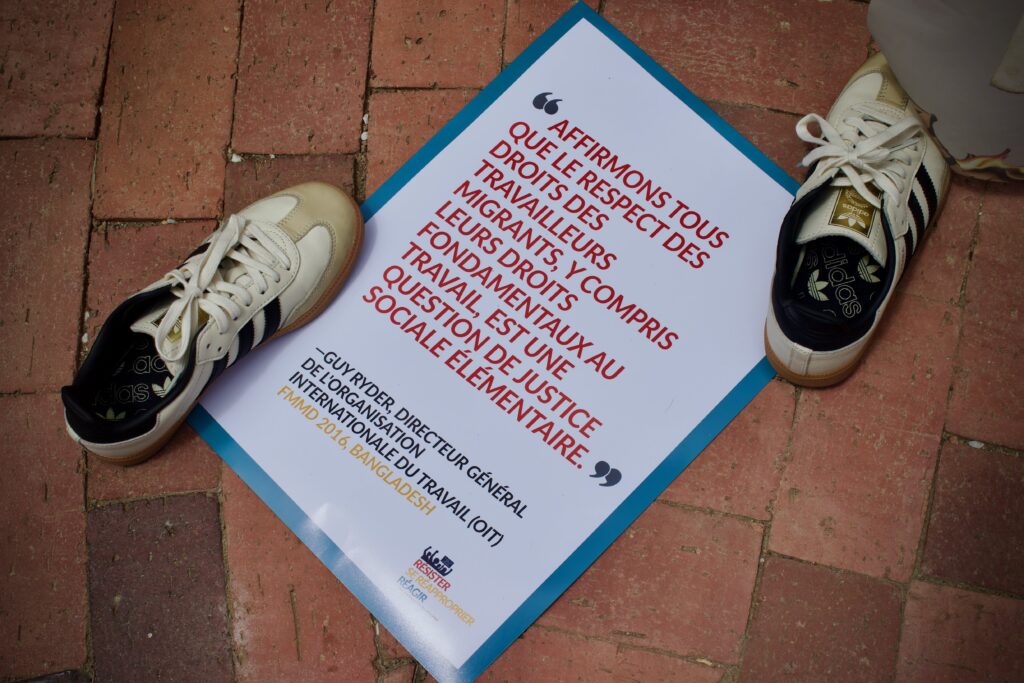
CSPM4 led civil society delegates in a series of discussions and reflections on the three core commitments of the campaign: Resist, Reclaim, Realise.
Delegates detailed practical examples of resistance to the criminalisation of migrants, the intimidation of human rights defenders, and the silencing of migrant voices. “Resistance is not just endurance,” stated Pedro Rios of the National Network for Immigrant and Refugee Rights, reflecting on his work to uphold migrant rights at the U.S-Mexico border. “Resistance means building something new, and being led in this task by those who are the most impacted.”
Despite the many challenges and risks for those standing in solidarity with migrants, delegates remained committed to resistance via documenting, exposing, and challenging violations of migrants’ rights. “Our work is about serving vulnerable people, and we must not lose sight of this despite the very real risks that we face,” said Ema Vueti of Pacific Migration Partners. “Here we can draw on the hope that is provided via our collective strength as civil society.”
The campaign aims to reclaim the language of human rights, and the dignity, humanity, and justice of all people on the move. “This is no longer about Conventions, policies, or written standards, but about our principles and who we are,” said William Gois. “If we don’t do this, it will be the powerful who will define what human rights are, in their own interests and at the expense of the rights and dignity of those who are suffering.”
Michele Levoy of the Platform for International Cooperation on Undocumented Migrants (PICUM) reflected on the need to move away from advocating for the inclusion of human rights language in migration policies, noting the common incoherence of policies that refer to fundamental rights while directly contradicting them in practice. “Institutions have ingrained the language and concepts of migration management, and to a certain extent we as civil society have done the same,” she said. “We must find new ways to resist this hollowing out of the very concept of rights, and to demand accountability.”
The campaign aims to realise a collective vision for just migration systems, rooted in truth, humanity, and rights. “When human rights have become something that states don’t even aspire to anymore, we can no longer settle for vague commitments or empty declarations,” said Elana Wong. “How can we talk to states about feminist migration policies or increasing remittances when people are being kidnapped? We must make clear that this is no longer business as usual, and push for concrete change in policies, practices, and protections on the ground.”
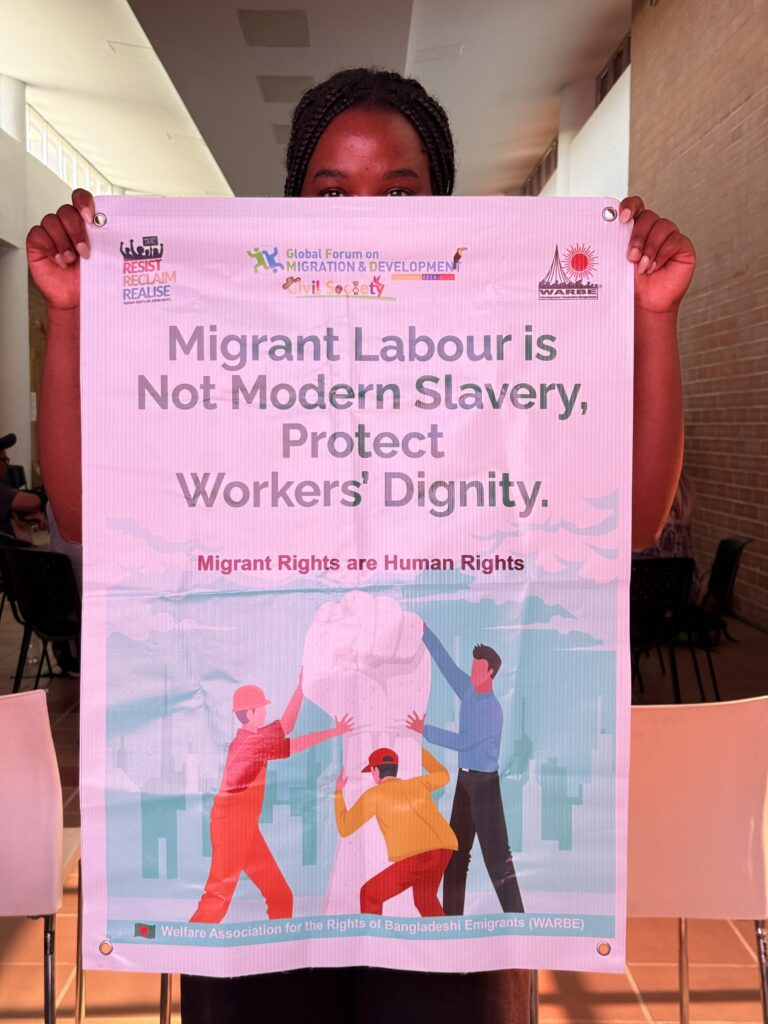
Looking to the Future: The Civil Society Riohacha Declaration
Far from being an initiative confined solely to the GFMD Summit, ‘Resist, Reclaim, Realise: Migrant Rights are Human Rights’ is a long-term initiative, that will provide a foundation for civil society advocacy strategy and action in the coming years.
“What is happening now is not going to change next year, or in two years, or if there is a new President of the United States,” stated William Gois of Migrant Forum in Asia. “This is why the campaign will be in place to guide and sustain our actions in the coming 5-10 years.”
The forthcoming Civil Society Riohacha Declaration will provide a central tool for civil society to disseminate the campaign, and mobilize the support and engagement of wider civil society and human rights-based social movements around the world.
“The Declaration is something that everyone can take away, and that makes clear that for civil society this is not business as usual,” explained Elana Wong. “It will enable us to carry this momentum forward, to go back to our communities and carry on the fight.”
The campaign aims for 12 million Declaration signatories to take to the upcoming International Migration Review Forum (IMRF), taking place in New York in 2026. “We can show those 12 million signatories at the IMRF, and say to States and the UN ‘look at the support we have, now do your jobs’,”, said William Gois.